


The Differences Between Overglaze, Underglaze, and In-glaze Porcelain Tableware
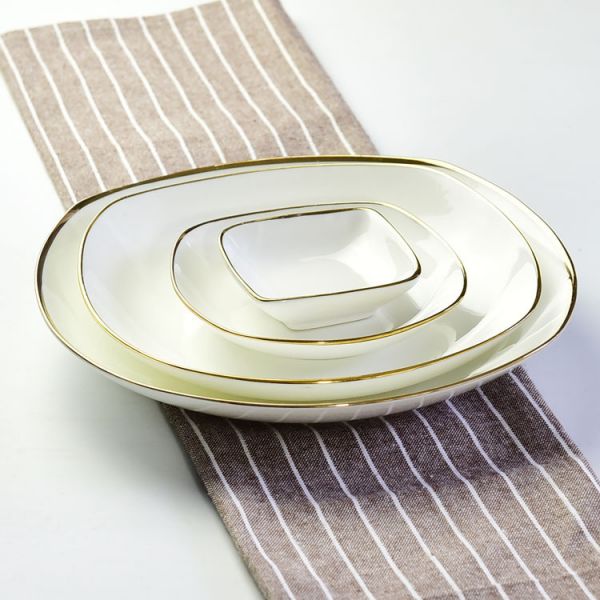
Porcelain tableware is not only functional but also a canvas for artistic expression. One of the key factors that define the beauty and durability of porcelain dishes is the decoration technique used. The three most common methods are overglaze, underglaze, and in-glaze decoration. Each technique has distinct characteristics in terms of production process, surface effect, and usability.
1. Overglaze Porcelain Tableware
Process and Features:
Overglaze porcelain involves applying colored patterns or designs on top of the already fired glaze. These patterns are then fired at a relatively low temperature. Since the glaze does not fully melt during this process, the decoration sits above the surface, often resulting in a slightly raised texture that can be felt by touch.
Advantages:
- Bright and vivid colors
- Clear and detailed patterns, ideal for intricate lines and gradients
Limitations:
- Surface decoration is prone to wear and scratches
- Not ideal for daily, heavy use
Ideal Use:
- Decorative plates and collectible tableware
- Special occasion serving pieces
2. Underglaze Porcelain Tableware
Process and Features:
Underglaze decoration is applied directly onto the unfired porcelain body before a layer of glaze is added. The porcelain is then fired at a high temperature, causing the pigments and glaze to fuse. This results in a smooth surface with no raised texture, and the colors are protected under the glaze layer.
Advantages:
- Vivid colors and elegant patterns
- Resistant to wear and suitable for daily use
- Smooth and durable surface
Ideal Use:
- Everyday porcelain dishes and cups
- Commercial restaurant tableware
3. In-glaze Porcelain Tableware
Process and Features:
In-glaze porcelain combines pigments within the glaze itself before firing. During high-temperature firing, both the glaze and pigments fuse together, embedding the colors into the surface. The result is a smooth, glossy finish similar to underglaze decoration, but with subtle differences in visual depth and texture.
Advantages:
- Colors fully integrated into the glaze
- Smooth surface, resistant to scratches
- Combines artistry with durability
Ideal Use:
- Premium everyday tableware
- Artistic yet functional ceramic collections
Conclusion
Understanding the differences between overglaze, underglaze, and in-glaze porcelain tableware is essential for selecting the right pieces for your needs. While overglaze provides vivid, artistic designs suitable for display, underglaze and in-glaze offer durable, smooth, and practical surfaces ideal for everyday use. Choosing the appropriate decoration technique enhances both the aesthetic appeal and the functionality of porcelain tableware, adding value and style to your dining experience.


